
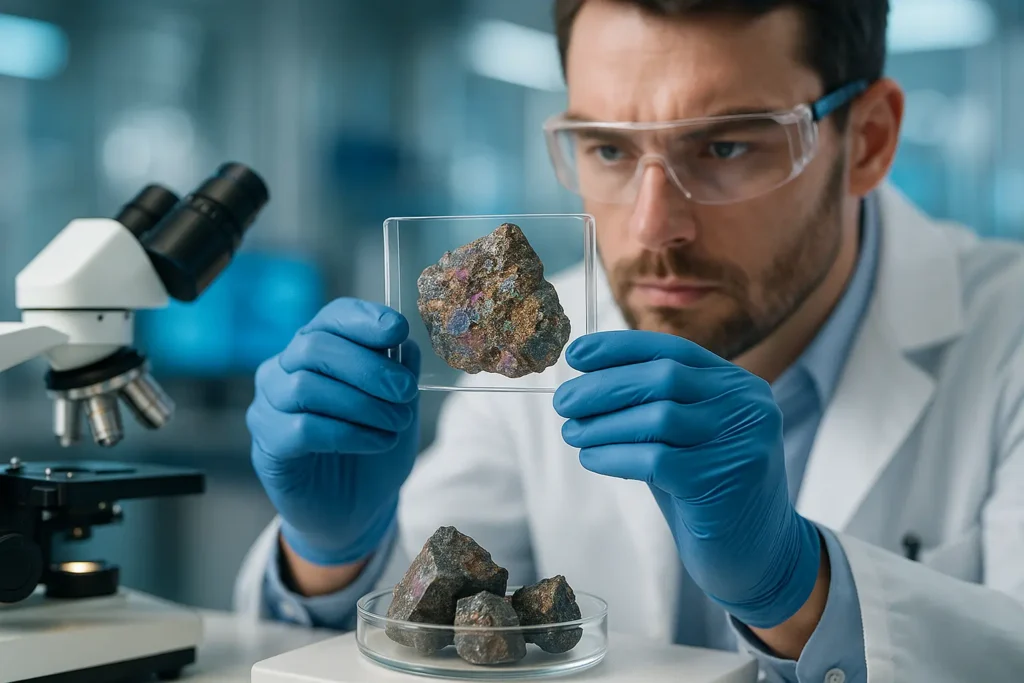
In recent years, a buzzword echoing through the corridors of industry has been “rare earths.” No longer confined to the annals of obscure scientific journals or niche corners of the mining world, these elements have burst onto the global stage, capturing the attention of governments, corporations, and the public alike. This phenomenon isn’t just about scientific curiosity; it’s about strategic supply chains, energy transitions, and geopolitical chess games. Let’s delve into why everyone in industry is suddenly talking about rare earths.
The Enigma of Rare Earth Elements
The term “rare earth elements” (REEs) might conjure images of mystery and scarcity. However, these elements are not as rare as their name suggests. They consist of 17 chemically similar elements found in the earth’s crust. Yet, the challenge lies in their extraction and processing. Due to their critical role in modern technologies, from smartphones to renewable energy systems, these materials have become indispensable.
China currently dominates the scene, controlling a significant portion of both the mining and processing of REEs. This dominance has raised concerns about supply reliability, especially as the global demand for these materials ramps up. As industry players and governments grapple with the implications of a Chinese monopoly, discussions around alternative sources and technologies are becoming increasingly urgent.
It’s not just about the metals themselves but also about their strategic importance. With the world pivoting towards greener energy, the demand for REEs, such as neodymium and dysprosium, used in wind turbines and electric vehicle motors, is skyrocketing. The role these elements play in the future of energy cannot be understated.
Global Dynamics and Geopolitical Chess
In the intricate dance of global politics, rare earths have emerged as a powerful piece on the chessboard. Their strategic significance extends beyond industry into the realm of international relations.
Recent tensions between Ukraine and neighboring powers have spotlighted Europe’s dependency on Chinese-controlled REEs. The European Union, keen to reduce its reliance, is actively exploring partnerships with other potential suppliers while investing in domestic mining initiatives.
Meanwhile, in the United States, government policies are increasingly favoring the development of local mines to bolster national security. As the world watches the unfolding geopolitical drama, the role of rare earths in these dynamics becomes ever more pronounced.
Moreover, this unfolding scenario underscores the urgent need for global cooperation in developing sustainable production and processing methods. Innovation in recycling technologies and alternative materials is critical not just for environmental sustainability but also for maintaining economic stability in the face of fluctuating geopolitical climates.
Innovations and Future Prospects
As we navigate the complexities of the rare earth market, innovation emerges as a beacon of hope for future prospects. Companies and researchers are pouring resources into developing new techniques for mining and processing these elusive elements more efficiently and sustainably.
One promising avenue is the exploration of urban mining, a method that involves recycling rare earths from electronic waste. This approach not only addresses environmental concerns but also opens up a new stream of supply independent of traditional mining.
Simultaneously, advancements in material science are paving the way for alternatives to rare earths. Researchers are pushing the boundaries of what’s possible, seeking substitutes that can perform similar functions without relying on materials that present supply risks.
As the world becomes increasingly interconnected, the demand for REEs is unlikely to wane. Thus, the future of rare earths hinges on our collective ability to innovate and adapt. The path forward is fraught with challenges, but also brimming with opportunities for those willing to pioneer the next wave of technological breakthroughs.
The discussion around rare earths is not simply a matter of scientific interest; it’s a reflection of where we’re headed as a global community. The demand for these critical materials will continue to rise as technology evolves and energy needs shift. Our ability to address the associated challenges is essential to navigating the future.
In this intricate web of supply chains, geopolitical influences, and innovation, rare earths represent both a challenge and an opportunity. As we continue to explore sustainable solutions and forge international collaborations, we must remember that the conversation around rare earths is a microcosm of the broader dialogue about technology, sustainability, and global cooperation.
As we ride this wave, let us do so with a commitment to responsible stewardship of these invaluable resources, ensuring they support a future that is not only technologically advanced but also equitable and sustainable for generations to come.
FAQ
What are rare earth elements, and why are they significant?
Rare earth elements (REEs) are a group of 17 chemically similar elements that are crucial in the production of high-tech devices. They play an integral role in technologies like smartphones, electric vehicles, and renewable energy systems due to their unique magnetic, luminescent, and electrochemical properties.
Why has there been a surge in interest regarding rare earths in recent years?
The recent surge in interest is driven by their critical role in the transition to cleaner energy sources and the increasing demand for high-tech products. As technologies advance, the need for materials that enhance performance and efficiency becomes more pronounced, elevating the importance of rare earths.
Which industries are most dependent on rare earth elements?
Industries heavily reliant on rare earth elements include electronics, automotive, renewable energy, and defense. For instance, REEs are vital in the manufacturing of wind turbines, electric vehicle motors, and advanced military equipment, all of which require high-performance materials.
Where are the primary sources of rare earth elements located globally?
While rare earths can be found worldwide, the majority of production is concentrated in China, which accounts for a significant portion of global supply. Other notable sources include the United States, Australia, and some countries in Africa, but their output is relatively smaller compared to China.
What challenges are associated with the extraction and use of rare earth elements?
The extraction and processing of rare earths present environmental and geopolitical challenges. Mining these elements often leads to ecological damage, and the concentration of supply in a few countries raises concerns about supply chain stability and potential political leverage.