
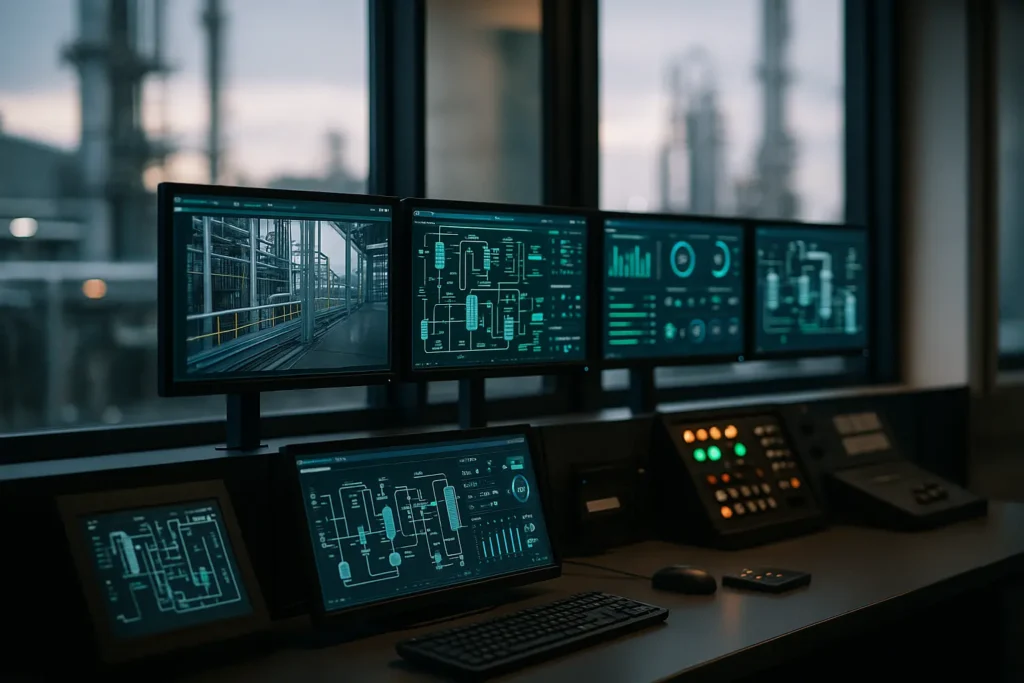
In this digital age, technological innovation is reshaping industries at a remarkable pace. And among these groundbreaking transformations, the emergence of “Ghost Factories” and remote industrial oversight stands out as particularly revolutionary. Imagine a world where factories operate silently, efficiently, and autonomously, without the constant hum of machinery or the hustle of workers. This isn’t a scene from a futuristic novel but a present-day reality. As we delve into this phenomenon, we aim to uncover the intricate layers of its operation, the implications for global competition, and how it reshapes our understanding of work and innovation.
Our exploration begins with the conceptual framework of Ghost Factories, transitioning into the security concerns they raise, and finally, the societal and economic ramifications they herald. Join us as we unravel this intriguing development that is not just changing how industries operate but how they interact with their ecosystems.
The Mechanics of Ghost Factories
Ghost Factories, in essence, symbolize the pinnacle of automated manufacturing. These facilities, often devoid of human presence, leverage cutting-edge technology to run with minimal human intervention. The notion of factories functioning autonomously may strike many as futuristic, yet the mechanization of industry has long been in the pipeline.
In Ghost Factories, capabilities such as advanced robotics, IoT (Internet of Things), and real-time data analytics converge to create a seamless production environment. These factories are not bound by the traditional limitations of time, able to operate under any circumstances, thus maximizing output and efficiency. The integration of machine learning algorithms allows for continuous improvements, fine-tuning processes to perfection.
A central aspect of these establishments is their reliance on real-time data. By constantly analyzing and adapting to new information, they can preemptively address potential issues, ensuring optimal performance. This signifies a shift from reactive to proactive industries, where systems work autonomously to enhance productivity. However, the transformation doesn’t end at efficiency; it also calls for a reevaluation of workforces and skill sets as these digital ecosystems evolve.
As companies and industry leaders strive for more sustainable operations, Ghost Factories offer a glimpse into a future where innovation knows no bounds. Yet, as we embrace these advancements, we must also confront the challenges they bring, particularly concerning security and privacy.
Security Concerns in the Age of Automation
Automation and remote oversight, while revolutionary, introduce a complex web of security challenges. As Ghost Factories proliferate, safeguarding their operations becomes paramount. With interconnected systems and constant data exchanges, these factories present enticing targets for cyberattacks, espionage, and sabotage.
In this new era, security is not just about physical barriers but extends into the digital realm. Ensuring data integrity, protecting intellectual property, and maintaining operational continuity require robust cybersecurity measures. The United States and other nations are increasingly prioritizing cybersecurity frameworks to protect these vital assets. Companies must adopt multi-layered defense strategies that include encryption, intrusion detection systems, and real-time monitoring to counter these threats.
Moreover, the state and corporate entities need to foster a culture of collaboration and information sharing. By working together, governments and private sectors can effectively tackle these security challenges. This collective effort ensures that as we embrace the benefits of automation, we are equally prepared to handle its potential pitfalls.
Amidst this, we must also address the ethical implications of surveillance and privacy. Remote oversight, while enhancing efficiency, raises questions about individual privacy and data collection norms. A balance must be struck between innovation and rights protection, paving the way for ethical technological advancement.
As we navigate this landscape, people must remain at the core of these developments, ensuring that technology serves humanity and not the other way around.
The Societal and Economic Impact
The rise of Ghost Factories and remote oversight delivers profound societal and economic shifts, profoundly altering the fabric of our contemporary world. As companies transition to autonomous operations, the traditional concept of the workplace is redefined, triggering debates about job displacement and evolving skill requirements.
While automation promises increased productivity and cost reductions, it also raises questions about the future of work. Many fear that jobs, particularly those in manufacturing, may become obsolete. Yet, this shift also presents opportunities for new roles centered around managing and maintaining these advanced systems. As companies adapt, an emphasis on reskilling and upskilling emerges, offering individuals pathways to new and perhaps unforeseen career opportunities.
On the economic front, Ghost Factories enable businesses to remain competitive in a globalized market. By reducing overheads and increasing efficiency, companies can allocate resources to innovation and expansion. This transformation fuels economic growth, fostering an environment ripe for entrepreneurship and creativity.
However, the benefits are not without their costs. The consolidation of power among a few tech-savvy corporations raises concerns about monopolistic practices and power imbalances. As technology continues to advance, regulatory frameworks must evolve, ensuring fair competition and safeguarding the interests of smaller enterprises.
In this unfolding narrative, the role of the individual is as pivotal as ever. By embracing change and advocating for inclusive growth, we can ensure that the march towards automation benefits society as a whole.
As we stand on the precipice of a new industrial revolution, Ghost Factories symbolize the myriad possibilities unlocked by technology and innovation. While the transition to automated, remote oversight systems presents challenges, it simultaneously opens doors to unprecedented opportunities.
Our journey through the mechanics of these factories, the security challenges they entail, and their societal impacts underscores the multi-dimensional nature of this transformation. It is a time for leaders, innovators, and individuals alike to collaborate, ensuring that this evolution is harmonious and inclusive.
The path forward is one of balance, where technological prowess intertwines with ethical considerations, fostering a future that is both innovative and equitable. As we embrace this new dawn, let us remain vigilant, adaptive, and forward-thinking, ready to harness the potential of Ghost Factories while safeguarding the virtues and values that bind us together as a global community.
FAQ
What are ‘ghost factories’ and how are they different from traditional manufacturing plants?
“Ghost factories” refer to facilities that operate with minimal human presence, leveraging advanced automation and remote management technologies. Unlike traditional plants, these factories rely heavily on artificial intelligence and robotics to carry out production processes with limited on-site supervision.
How has remote industrial oversight evolved with modern technology?
Remote industrial oversight has significantly advanced due to improvements in connectivity, data analytics, and real-time monitoring tools. These technologies enable operators to manage and optimize production processes from afar, ensuring efficiency and reducing the need for constant physical presence.
What are the main benefits of implementing ‘ghost factories’?
The primary advantages include increased operational efficiency, reduced labor costs, and enhanced flexibility. With automation at the core, these factories can maintain continuous production cycles, adapt swiftly to changing demands, and minimize human error.
Are there any challenges associated with ‘ghost factories’?
Yes, challenges include the initial high cost of technology implementation, potential cybersecurity threats, and the need for skilled personnel to manage and maintain advanced systems remotely. Additionally, there are concerns about job displacement due to automation.
How do ‘ghost factories’ impact environmental sustainability?
By optimizing resource use and reducing waste through precise control, ‘ghost factories’ can contribute positively to environmental sustainability. Their streamlined operations often result in lower energy consumption and reduced emissions compared to traditional manufacturing setups.