
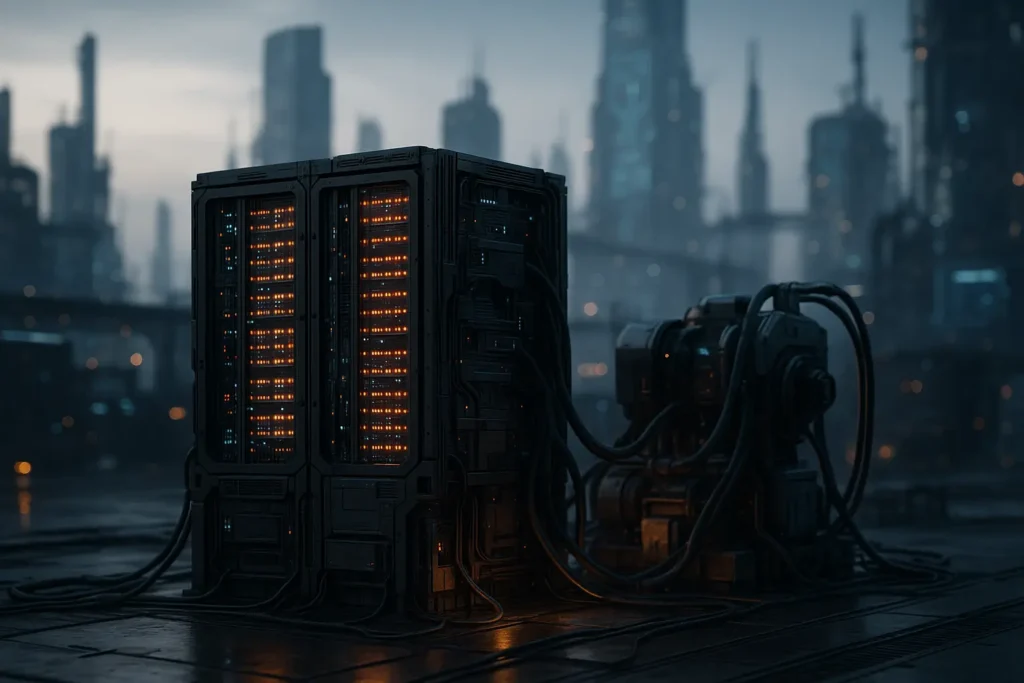
Imagine a world where the boundaries between the digital and the physical realms blur seamlessly into one another, creating a tapestry of connections that redefine our understanding of existence. Welcome to the metaverse, an expansive digital ecosystem that promises to reshape industries and revolutionize how we perceive reality. As we embark on this journey, we find that large industrial corporations quietly wield the power to drive this evolution.
In this emerging universe, immersive experiences promise to engage users in ways previously unimaginable. However, it’s not just about flashy technology or virtual environments; it’s about real-world applications and the potential to transform everyday life. Our mission is to explore how the metaverse is being silently powered by the backbone of our industrial world, how data, innovation, and technology are weaving together a new reality.
The metaverse is not just a fleeting trend—it’s the future, and companies are investing immensely in their pursuit of this digital frontier. So, let’s dive into this modern marvel to understand how industrial giants are quietly revolutionizing the industry and crafting a new age for business and work.
The Industrial Backbone of the Metaverse
In the realms of technology, it’s often the companies that operate behind the scenes that wield the most influence. Industrial giants, often characterized by their vast infrastructure and extensive data repositories, are playing a pivotal role in constructing the metaverse. While consumer-focused firms capture headlines with flashy innovations, it’s the industrial behemoths that are laying the groundwork.
Consider how data management is an indispensable component of the metaverse. Industrial giants have long mastered the art of data collection and analysis, a skill that’s imperative in crafting immersive virtual experiences. Companies specializing in sectors like manufacturing, energy, and logistics possess mountains of data, which are now being harnessed to render digital realities with unparalleled accuracy.
Moreover, the convergence of technology in this digital age demands significant infrastructure. Industrial corporations, with their vast resources, are uniquely positioned to provide such infrastructure. From cutting-edge servers to high-speed networks, these organizations offer the necessary foundation for a functional and robust metaverse.
It’s also crucial to acknowledge the role of technology in bridging the gap between the virtual and the real. Advanced simulation techniques, initially developed for industries like automotive and aerospace, are now finding new life in metaverse applications. These technological marvels enable users to interact with both digital and tangible elements harmoniously.
While the metaverse captivates with its visual allure, it’s the quiet prowess of these industrial powerhouses that truly propels it forward. As we navigate this intersection of reality and virtuality, we must recognize the unseen forces shaping its trajectory.
Reimagining Business and Work in a Digital Realm
The metaverse isn’t simply a playground for tech enthusiasts; it’s rapidly becoming a transformative force reshaping how businesses operate. As the digital landscape evolves, so too does the very nature of work, offering companies unprecedented opportunities to innovate and expand.
For businesses, the metaverse presents a unique opportunity to enhance efficiency and reach. Imagine a company conducting virtual meetings in rich, immersive environments that feel as real as the boardroom. Distance becomes irrelevant, allowing global teams to collaborate in ways previously impossible. Industrial giants are leveraging their technological prowess to create these seamless interactions.
Furthermore, the metaverse enables companies to envision real-world applications for virtual environments. Industrial leaders are already experimenting with virtual training modules, enabling workers to acquire new skills in realistic simulations without the risks associated with physical training. This not only enhances safety but also boosts productivity.
The fusion of virtual and real worlds also changes the way we approach design and development. Industries that once relied on physical prototypes are turning to digital twins—virtual replicas that mimic their physical counterparts in every detail. These digital twins allow companies to test and refine products before they even hit the manufacturing floor, saving both time and resources.
As the metaverse’s potential continues to unfold, businesses must adapt to this evolving landscape. Embracing the technologies that define this digital realm will be essential for future success and competitiveness. The industries that innovate and propel these transformations today will be the ones leading us into this new era of work.
Crafting User Experiences Beyond Imagination
In the dawn of the metaverse, the user experience stands as a cornerstone of its success. As we venture into this vast digital expanse, we seek not only to observe but to engage, interact, and immerse ourselves in experiences that defy conventional understanding.
At the heart of these experiences is the technology that makes them possible. Industrial players are pushing the boundaries of virtual innovation, harnessing decades of expertise to craft environments that captivate and inspire. Whether it’s through VR headsets or immersive simulations, these experiences are redefining how users perceive the digital landscape.
One of the remarkable aspects of the metaverse is its ability to create unique and personalized experiences. Data analytics, an area where industrial giants excel, plays a critical role in tailoring these interactions. By analyzing user behavior and preferences, companies can provide bespoke experiences that resonate on a personal level.
A significant component of this evolution lies in the ability to merge digital realities with tangible counterparts. Imagine participating in a virtual conference where you can interact with realistic avatars of industry leaders, or exploring a virtual showroom where you can seamlessly transition to purchasing a real-world product. The possibilities for users are virtually limitless.
As we venture deeper into this digital frontier, we must remain mindful of the real-world implications of these experiences. While the metaverse offers tremendous potential, it also poses challenges in terms of privacy, security, and ethical considerations. As curators of this new reality, it is our responsibility to ensure that these experiences are not only enriching but also responsible.
The conversation around the metaverse often gravitates towards its superficial allure—the stunning visuals and engaging experiences. Yet, as we’ve explored, the true power of this digital frontier lies in the industries that quietly fuel its engine. Industrial giants are not just participants in this evolution; they are its architects, laying the foundation for a future where digital and real worlds coexist harmoniously.
In this modern tapestry of human achievement, we find that businesses and individuals alike must adapt to a new way of thinking. The rules of economy, work, and experience have been rewritten, demanding creativity, innovation, and an unwavering commitment to progress.
As we stand on the brink of this digital transformation, we must remind ourselves that the metaverse is but a reflection of our human aspirations. It embodies our desire to connect, to explore, and to transcend the limits of our reality. By harnessing the technologies and insights of industrial giants, we can shape a future that is not only immersive but also grounded in real-world applications.
The metaverse is not an endpoint; it is a journey—a journey that invites users from all walks of life to participate in its unfolding narrative. Beyond the virtual horizon lies a future reimagined, where the potential for growth, creativity, and connection knows no bounds. Let us embark on this journey together, guided by the silent but powerful forces that drive innovation and redefine our understanding of the world.
FAQ
What role do industrial giants play in the development of the metaverse?
Industrial giants are leveraging their extensive technological expertise and vast resources to develop the infrastructure necessary for the metaverse. This includes advancements in virtual reality, augmented reality, and cloud computing to create immersive digital environments.
How are manufacturing companies contributing to the metaverse’s growth?
Manufacturing companies are pioneering the creation of virtual replicas of real-world machinery and environments. These digital twins enable seamless simulations and testing, enhancing both the efficiency and innovation of metaverse applications.
Why is cloud computing essential for the metaverse’s expansion?
Cloud computing provides the scalable and robust infrastructure required to support the vast data processing and storage needs of the metaverse. It ensures that users can access immersive experiences from anywhere, without the limitations of local hardware.
In what ways are tech giants ensuring security within the metaverse?
Tech giants are implementing advanced cybersecurity measures and privacy protocols to protect users within the metaverse. This includes encryption technologies, secure identity verification methods, and continuous monitoring to safeguard personal data and digital assets.
How does collaboration between industries influence the metaverse’s development?
Cross-industry collaboration fosters innovation and accelerates the development of the metaverse. By sharing expertise and resources, companies from different sectors can create more comprehensive and interconnected virtual experiences, laying the groundwork for future advancements.