
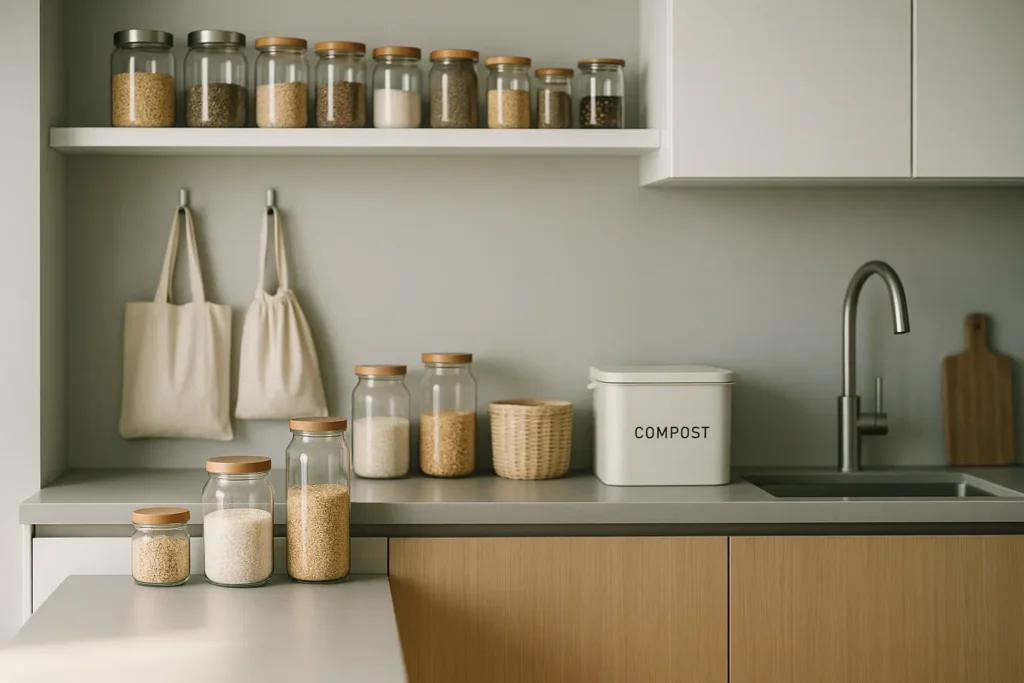
In our daily quest for reducing waste, the kitchen emerges as the heart of the home where significant changes can spark impactful results. Have you ever wondered if your kitchen can achieve a zero-waste state without resembling a scene from a green advertisement? Our modern lifestyle often challenges us with overwhelming choices. Yet, the journey to a sustainable kitchen doesn’t have to compromise on style or functionality. Today, we’ll explore how an eco-friendly kitchen can be both practical and aesthetically pleasing, ensuring each choice we make harmonizes with our living space.
Reducing Waste: A Culinary Art
Our kitchens are bustling hubs where food preparation and consumption come with inherent waste challenges. We must tackle these systematically to embrace a zero-waste ethos. Plastic dependency in kitchens, from wraps to bags, is a formidable foe. However, we can champion this battle by opting for reusable alternatives. Using cloth bags for shopping or glass jars for storage reduces reliance on disposable products.
Food waste is another major component. We encourage buying bulk and locally sourced produce to minimize packaging waste. Planning meals ahead and storing leftovers in multi-use containers can also make a significant difference. Additionally, composting is a powerful tool to transform organic waste into nutrient-rich soil, further promoting a friendly ecosystem.
By recognizing and addressing these waste sources, we’re not just reducing landfill contributions but also establishing a sustainable kitchen that aligns with modern aesthetics. It’s about integrating solutions that are as visually appealing as they are functionally effective.
Sustainable Swaps: Style Meets Substance
Stepping into the realm of sustainable living doesn’t mean your kitchen has to scream “eco warrior”. It’s about embracing changes that seamlessly blend with your existing decor while maintaining functionality. One simple yet impactful swap is transitioning from single-use items to free alternatives. For instance, beeswax wraps instead of plastic wraps offer not only environmental benefits but also add a touch of rustic charm to your kitchen.
Investing in durable kitchenware made of materials like stainless steel, bamboo, or recycled glass can transform your kitchen’s aesthetic into a timeless, chic space. These materials often outperform traditional options, ensuring that form meets function in the most elegant way possible. Eco-friendly utensils and cutting boards made from sustainably sourced resources can complement any kitchen theme while aligning with our zero-waste goals.
By thoughtfully curating our kitchen tools with an eye for design, we not only reduce waste but also create a space that resonates with modern sensibilities. The key lies in understanding that sustainable choices don’t have to be stark; they can, and should, be stylish.
The Art of Mindful Consumption
Adopting a zero-waste lifestyle within our kitchens isn’t solely about what we use—it’s fundamentally intertwined with how we consume. Mindful consumption involves making conscious choices every step of the way, from purchasing to disposal.
Single-use products, often intended for convenience, can be swapped for options that promote longevity. Bringing your own containers for bulk buying or using refill stations for pantry staples not only cuts down on waste but also encourages a more deliberate approach to consumption. This shift also emphasizes quality over quantity, urging us to seek products that offer durability and multi-purpose use.
Mindfulness extends to the act of meal planning and preparation. By thoughtfully organizing our buying habits around what we truly need, we minimize food waste and make the most of our resources. This conscious approach leads to less clutter, ensuring that our kitchens remain efficient and free from unnecessary clutter, aligning perfectly with modern living aspirations.
As we navigate the complexities of contemporary living, the kitchen stands as a testament to our commitment to sustainable practices. The journey towards a zero-waste kitchen is not a linear path but rather a series of conscientious decisions that redefine our relationship with consumption. With a blend of innovation and tradition, we can create spaces that reflect both our values and our aesthetic tastes.
The true beauty of a zero-waste kitchen lies in its ability to be eco-friendly without losing its character or efficiency. By integrating mindful practices and sustainable choices, we embark on a modern kitchen revolution—one that transforms a simple room into a harmonious eco-conscious environment, fostering a deeper connection to our planet and our community.
FAQ
What does it mean to have a zero-waste kitchen?
A zero-waste kitchen aims to minimize waste by reducing reliance on single-use items, maximizing recycling, and composting organic waste. This approach focuses on sustainable practices that help decrease the environmental footprint of your culinary space.
Can a zero-waste kitchen still look stylish and modern?
Absolutely! A zero-waste kitchen can be both functional and aesthetically pleasing. By selecting reusable items in sleek designs and incorporating natural materials, your kitchen can maintain a modern appearance while being environmentally conscious.
What are some simple swaps to make my kitchen more eco-friendly?
Consider replacing disposable products with reusable alternatives, such as cloth napkins instead of paper towels, glass jars for storage instead of plastic containers, and stainless steel or bamboo utensils instead of single-use plastics.
How can I reduce food waste in my kitchen?
To cut down on food waste, plan meals in advance, store food properly to extend its shelf life, and get creative with leftovers. Composting food scraps also contributes to minimizing waste.
Are zero-waste kitchen products expensive to maintain?
While some sustainable products may have a higher initial cost, they often save money in the long run by reducing the need for constant replacements. Investing in quality, durable items can be cost-effective over time.